
Past
A driver of industry
Streams like the Fall Kill provided a source of food and fresh water for the region’s first inhabitants, the Wappinger, a confederation of Munsee-speaking people. Called the Val-kil (meaning “fall creek”) by Dutch settlers, the waterway fueled the city’s emergence as a center of industry, first powering grain and lumber mills and later factories that manufactured everything from pianos and underwear to cigars. Simultaneously, it became a toxic spillway and dumping ground.
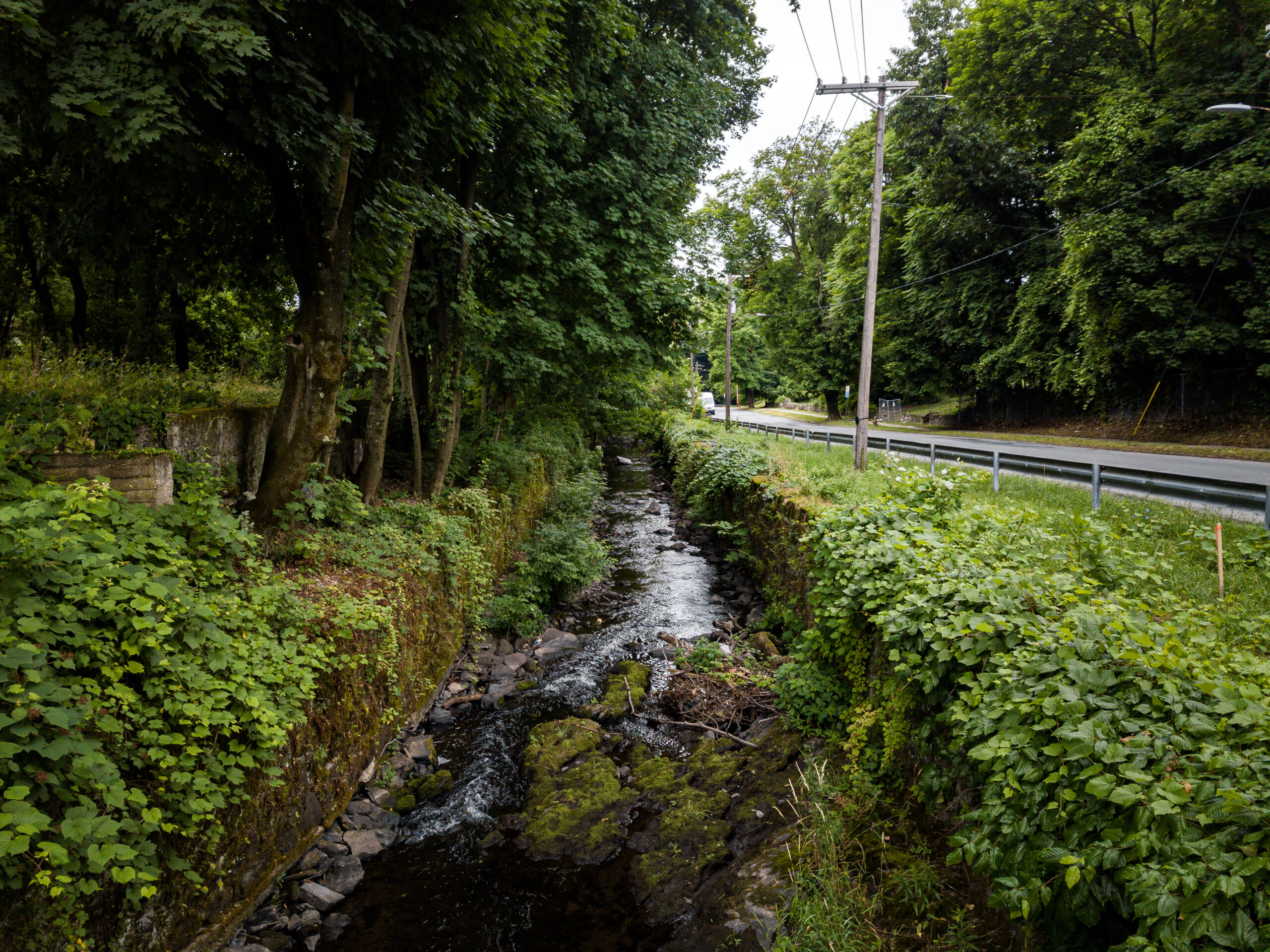
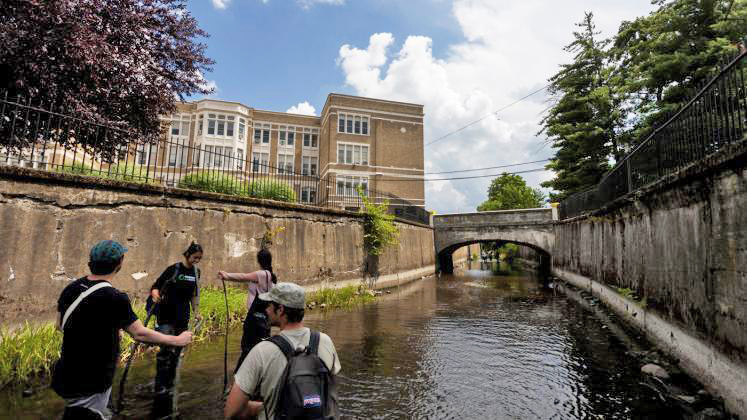
After industrial use dwindled in the 20th century, an unsafe and unhealthy waterway was left behind. Many of the stone and cement walls currently lining its path were built during the 1930s as the stream was channeled for new development. In addition to severely reducing safe public access to the creek, this has led to devastating flooding during extreme storm events.
Past
Present
A shared vision
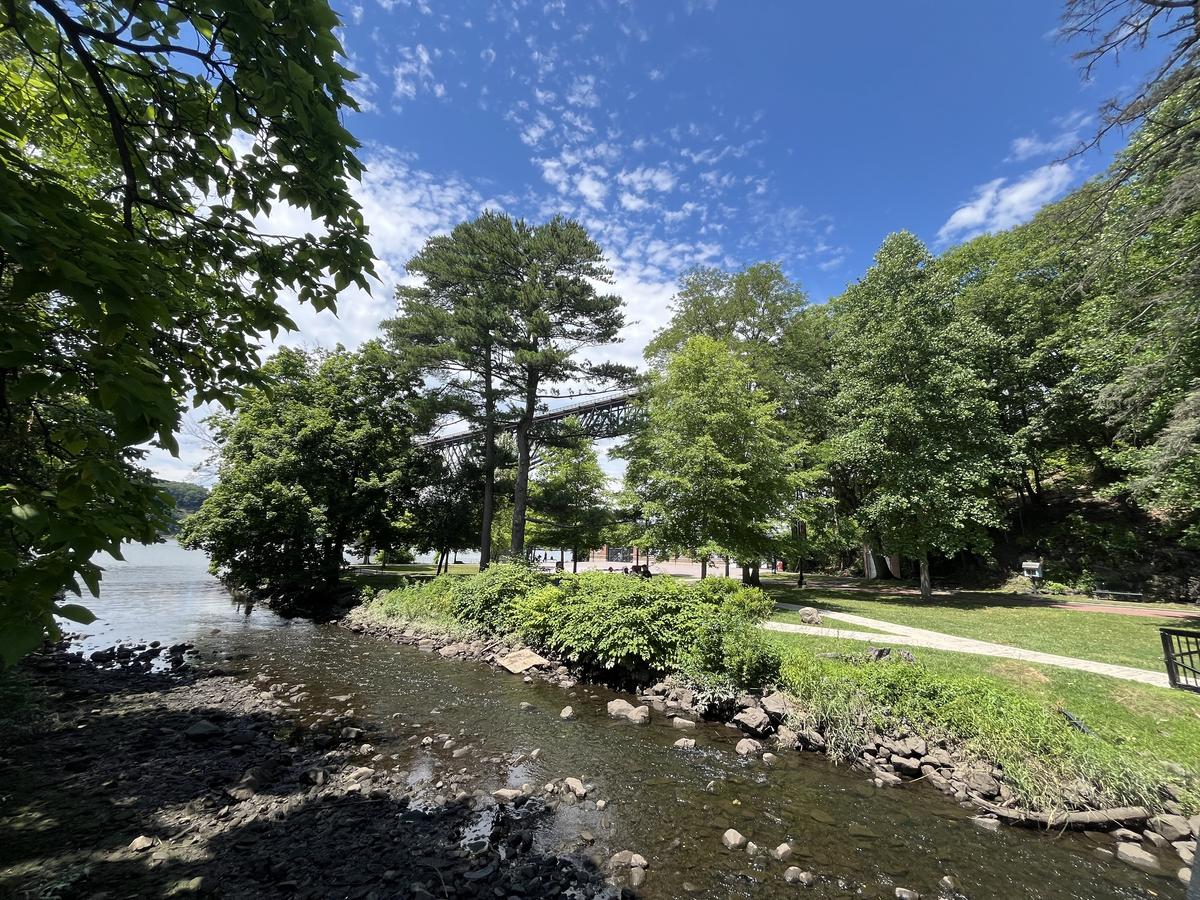
The Fall Kill, a Hudson River tributary, is a vital natural asset winding through the City of Poughkeepsie — and home to wildlife like American eels, great blue herons, and crayfish Thousands of people live and work alongside its banks, and community members have long been striving to care for and improve it. Regular volunteer cleanups hosted by local organizations have helped restore the creek’s beauty, while ongoing efforts aim to reduce pollution, improve public health, and protect wildlife. At the same time, the impacts of climate change — like stronger storms, expanded flooding, and extreme heat — are increasing risks to humans and wildlife alike.
Today, the City of Poughkeepsie is partnering with MASS Design Group and Scenic Hudson to enhance the Fall Kill as part of the City’s Local Waterfront Revitalization Program (LWRP). Together, they are developing design guidelines for a Fall Kill Blueway — an urban conservation and design strategy that centers the creek as the spine of public access and ecological enhancement. The project will also deliver landscape designs for five public spaces along the creek. These efforts will provide direction and leadership to reimagine the creek as a healthier, more accessible, and more resilient community resource.
The Fall Kill Watershed Coalition is a key stakeholder in this process. This group of residents, scientists, and activists works to improve the creek by advocating for watershed thinking and action beyond the city limits and brings diverse community voices into the project. Through a series of recommendations and site-specific concepts, the project will help the City and its residents make coordinated improvements along the entire Fall Kill corridor.
Watch this video to find out what makes the Fall Kill Watershed unique!
Present
Future
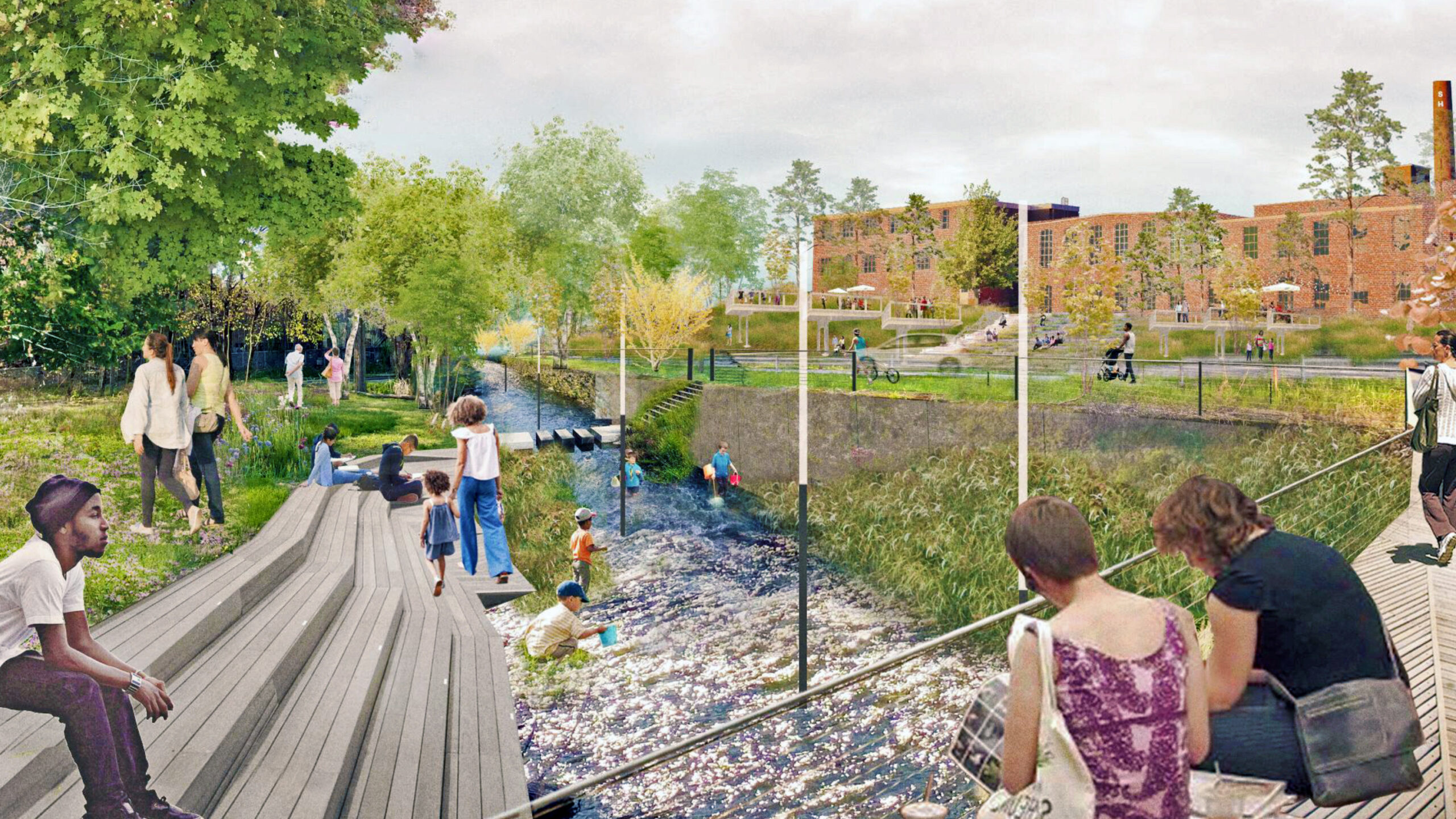
A connected, accessible, and resilient creek corridor
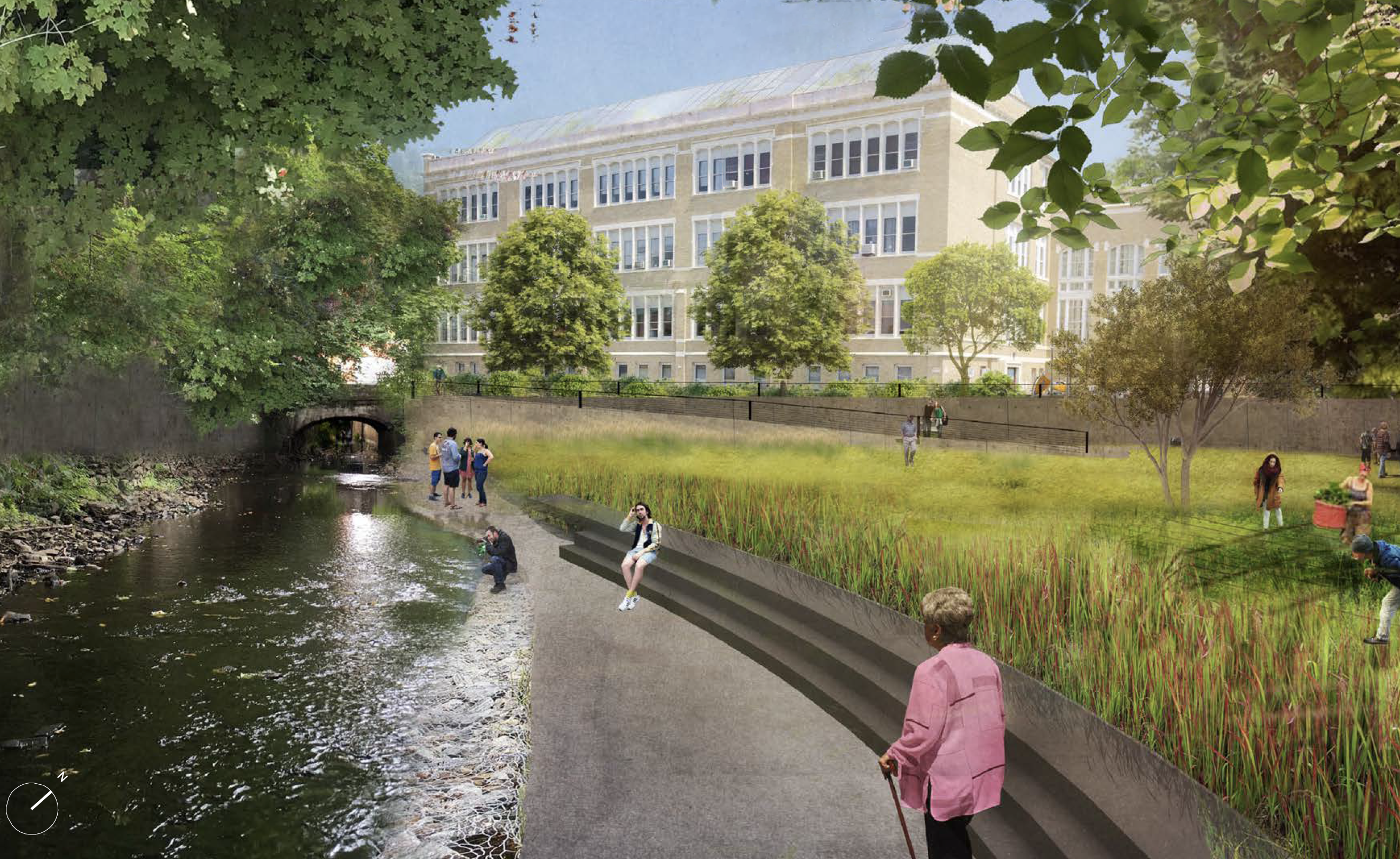
The Fall Kill Blueway is a vision that draws on urban design, conservation science, and community voices to create a shared action plan for a resilient Northside. Rather than being seen as a liability, the Blueway concept seeks to evoke a sense of pride, joy, and resilience. The Blueway will require shared leadership and collective action to address aging infrastructure, reduce flood risks, restore habitats, and expand safe public access to the water.
The Fall Kill of the future could be teeming with life. Creekside parks and trails will connect Northside neighbors with Poughkeepsie’s Main Street and the Hudson River. Together, these locations where people can experience the creek, or Fall Kill Moments, can create a nature-based network for recreation, learning, and everyday enjoyment.
Future
Get Involved
The Fall Kill could use your help, and there are many ways to participate:
• Join the Fall Kill Watershed Coalition to stay involved in ongoing stewardship and planning
• Attend Northside Collaborative meetings by emailing dmartinez@scenichudson.org
• Sign up for updates to receive invitations to public workshops, events, and community science opportunities
Whether you want to join the design process or simply stay informed, we invite you to connect.
Watch this video to find out what you can do to help protect your watershed!
FAQs (frequently asked questions)
What is the Fall Kill Blueway?
The Fall Kill Blueway is a collective strategy that builds on decades of community-driven work to reconnect residents to the creek through stewardship, environmental programming, community science, and the rehabilitation and development of parks along its corridor. While the Local Waterfront Revitalization Program (LWRP) planning process provides a formal framework, the Blueway reflects a broader, long-term vision to restore the Fall Kill as a connected system of accessible, ecologically healthy, and community-centered public spaces.
The LWRP Fall Kill Blueway Design Guidelines are a City of Poughkeepsie project, led in partnership with the architectural nonprofit MASS Design Group and the environmental nonprofit Scenic Hudson, with support from community partners and residents. The project is currently focused on creating guidelines and preliminary concepts for spaces along the creek. These guidelines will help steer future improvements, which will likely happen in phases as funding becomes available and projects move forward.
Where will the funding come from?
This planning effort is funded by the New York State Local Waterfront Revitalization Program (LWRP). Future improvements along the creek will likely be funded through a mix of local, state, federal, and private sources, depending on the type of project.
Will there be walking and biking paths?
The guidelines will explore opportunities for safer and more connected walking and biking routes along and near the creek. Because of private property and existing conditions, some connections may be on streets or sidewalks rather than directly along the water.
Will I be able to get in the water?
The vision includes providing places for public access to the shoreline for fishing, hands-on lessons about wildlife and water quality, and enjoying nature. The creek’s relatively shallow depth and swift current, combined with ongoing pollution (see next question), make it unsuitable for swimming.
Is the creek’s water safe?
The Fall Kill is listed as a “Class C” stream on the New York State Priority Waterbodies List, meaning it is safe for fishing but not for swimming. Significant problems in the creek include high levels of contaminants and nutrients (including nitrate, phosphate, sulfate, heavy metals, and hydrocarbons), high temperatures due to sparse tree coverage, and deficient oxygen levels. All of these impact public health and the well-being of wildlife.
The Fall Kill Watershed Coalition is working with Scenic Hudson to improve the creek’s water quality. If you’re interested in joining the coalition, you can sign up here.